
From Clinic to Copenhagen: Exploring the Science Behind Modern Hearing Aids
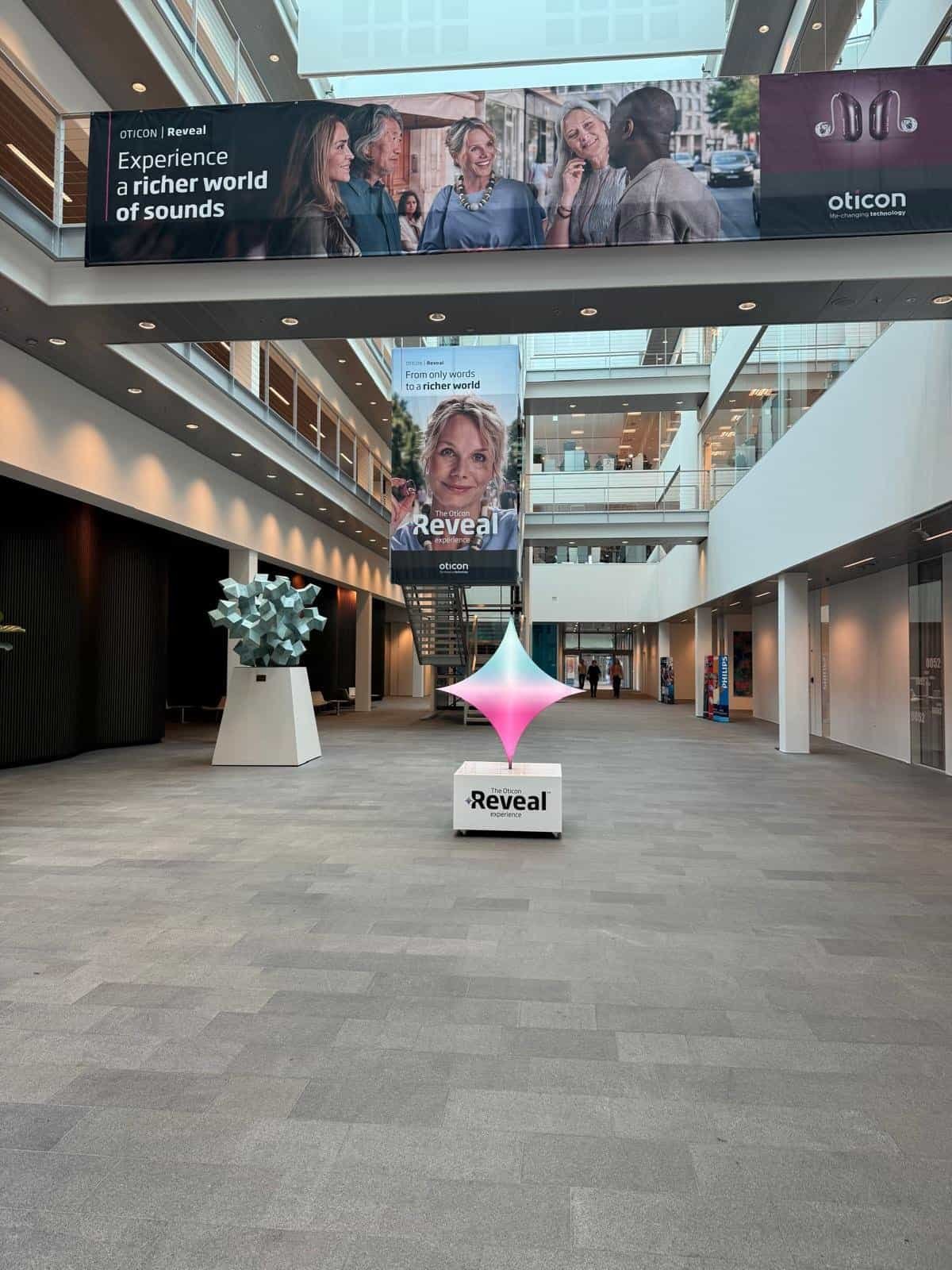
Last month we had the opportunity to travel to Denmark and visit both Oticon's headquarters and the Eriksholm Research Centre. As clinicians, we spend much of our time helping people hear better in everyday life, but we don't often get to see the extraordinary amount of research, engineering and testing that takes place behind the scenes before a hearing aid ever reaches a clinic. The visit offered a fascinating insight into the science that underpins modern hearing technology and the people working to improve hearing outcomes around the world.
More than just a hearing aid manufacturer
For many people, a hearing aid is simply a small device that helps them hear more clearly. It's easy to overlook the scale of the work required to develop that technology. Visiting Oticon's headquarters provided a valuable reminder that modern hearing aids are the result of collaboration between audiologists, engineers, software developers, acoustic scientists and researchers, all working towards a common goal: helping people stay connected to the sounds that matter most.
What particularly impressed us was the emphasis placed on understanding how people hear in the real world. Whether it is following a conversation in a busy restaurant, hearing family members around the dinner table or coping with challenging background noise, the focus remains firmly on solving genuine day-to-day listening problems rather than simply amplifying sound.
A Visit to Eriksholm Research Centre
A highlight of the trip was visiting Eriksholm, Oticon's dedicated research centre. While patients are often familiar with hearing aid brands, few realise the extent of the research that sits behind today's technology. Eriksholm brings together specialists from multiple disciplines to study hearing, speech understanding, cognition and acoustics, helping shape the innovations that eventually find their way into future products.
Research at facilities such as Eriksholm goes far beyond hearing aids themselves. Scientists are continually exploring how the brain processes sound, how people separate speech from background noise and how hearing loss impacts communication in everyday environments. This deeper understanding ultimately helps manufacturers create technologies that support more natural and effortless listening.
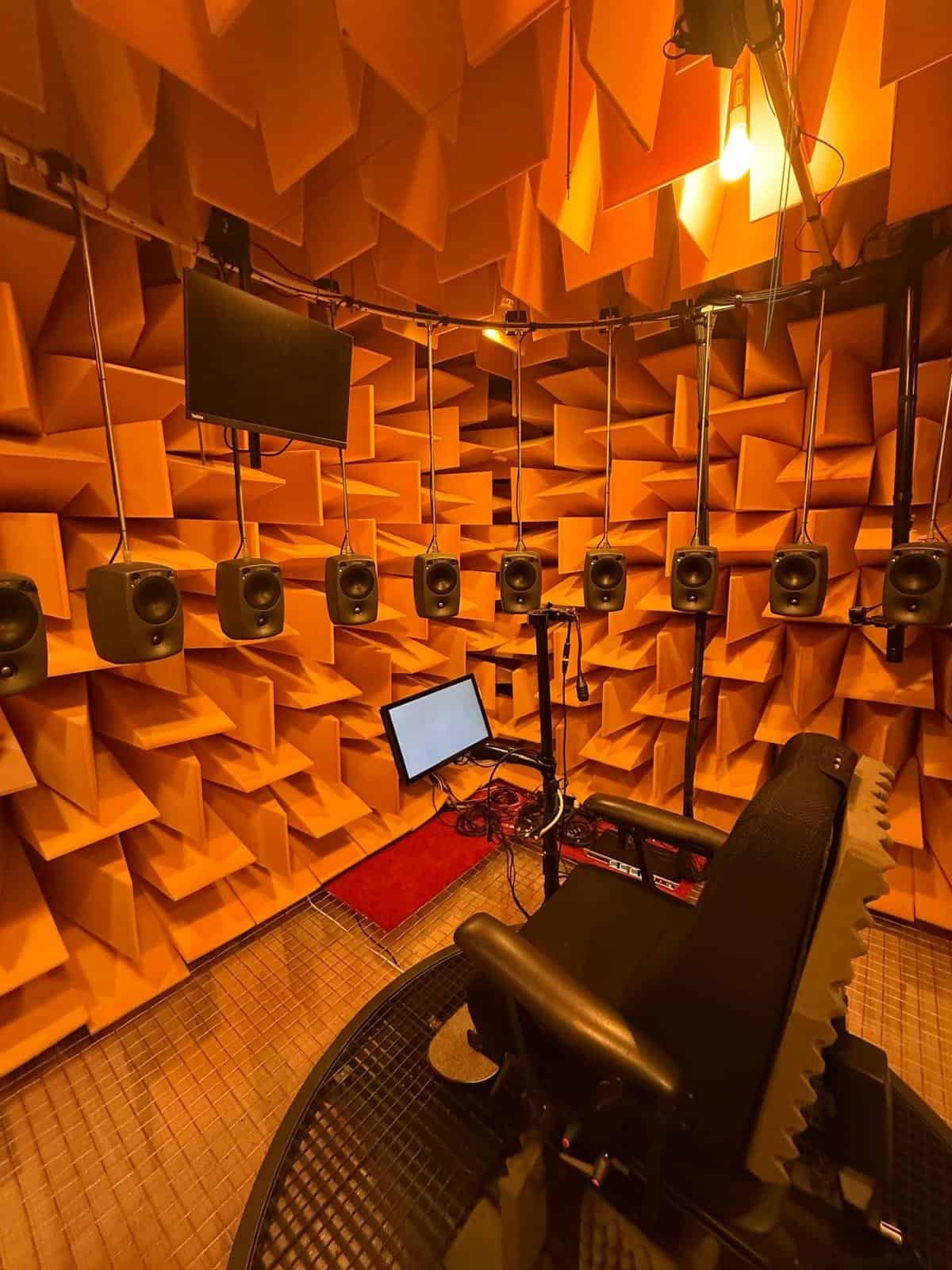
Sitting Inside an Anechoic Chamber
Perhaps the most memorable experience of the visit was spending time inside an anechoic chamber, a highly specialised room designed to absorb almost all sound reflections. In everyday environments, sound bounces off walls, ceilings and floors. Inside an anechoic chamber, those reflections are almost entirely eliminated, creating an environment unlike anything most people have ever experienced.
Many visitors describe becoming acutely aware of sounds they would normally never notice. Without the constant background noise of everyday life, even subtle sounds such as breathing, swallowing and body movement become surprisingly prominent. Some people even report hearing their own heartbeat. The sensation is difficult to describe and certainly unlike any room we have ever stepped into before.
For hearing researchers, however, this extraordinary level of acoustic control is invaluable. It allows sounds to be measured with remarkable precision and helps researchers assess speech understanding, hearing aid performance and localisation in carefully controlled conditions. The experience was a vivid reminder that hearing is about much more than volume alone. Our ears and brains work together to help us navigate a rich and complex world of sound.

Why Visits Like This Matter
As an independent hearing care provider, we work with multiple manufacturers and remain committed to recommending technology based on individual patient needs rather than any particular brand. Opportunities to meet the teams behind the products, understand the research process and see testing facilities first-hand help ensure we remain informed about the latest developments shaping the profession.
The visit also reinforced something we see every day in clinic: hearing aids may be small, but the science behind them certainly isn't. Behind every device sits years of research, innovation and a shared commitment to helping people communicate more confidently and stay connected to the world around them.