How the Ear Works
Your hearing is an incredibly sophisticated system. Every sound you hear — from conversations to music to the world around you — is processed through a series of delicate structures in the ear before being interpreted by your brain.
This page explains how the ear works in simple, clear steps.
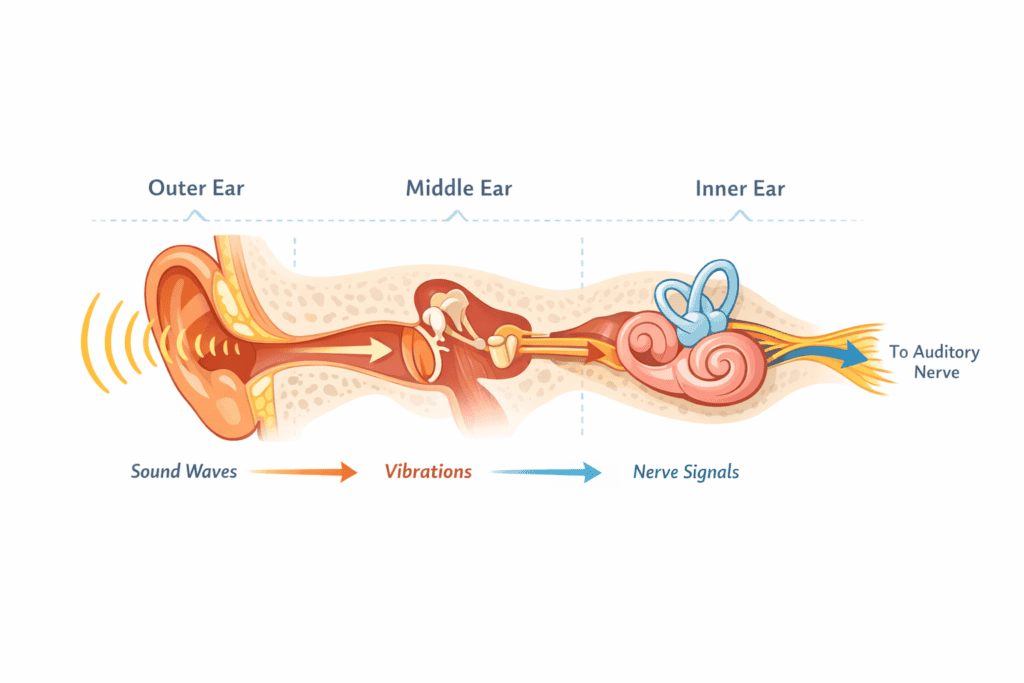
The Outer Ear
The outer ear includes:
• the part you can see (the pinna)
• the ear canal
Its job is to collect sound waves and guide them toward the eardrum.
The Middle Ear
The middle ear contains:
• the eardrum
• three tiny bones (ossicles): malleus, incus and stapes
When sound reaches the eardrum, it vibrates.
These vibrations are amplified by the ossicles and passed into the inner ear.
The Inner Ear
The inner ear contains:
• the cochlea (responsible for hearing)
• the vestibular system (responsible for balance)
Inside the cochlea are thousands of tiny hair cells.
These convert sound vibrations into electrical signals.
The Hearing Nerve
The auditory nerve carries these electrical signals to the brain, where they are interpreted as meaningful sound — speech, music, environmental noise and more.
Why Understanding the Ear Matters
Knowing how your hearing works helps you understand:
• why hearing loss happens
• why early testing is important
• how hearing aids support the natural hearing process
If you’re concerned about your hearing, we’re here to help.
We support patients across North and South Lanarkshire, including Motherwell, Hamilton, East Kilbride, Bellshill, Wishaw, Uddingston and the surrounding areas.
Frequently Asked Questions
What part of the ear is responsible for hearing?
The cochlea in the inner ear converts sound vibrations into electrical signals your brain can understand.
Why do some sounds feel louder than others?
Your ear naturally amplifies certain frequencies, and your brain prioritises speech sounds.
Can ear problems affect balance?
Yes. The inner ear also contains the balance system, so issues there can affect stability.