Rechargeable Hearing Aids
Rechargeable hearing aids have become the most popular choice for patients at Audibility — and for good reason.
Modern lithium‑ion technology makes them simple, reliable, and ideal for everyday use.
Around 99% of the hearing aids we prescribe are now rechargeable, unless a patient specifically requests a traditional battery‑powered model.
Book a Hearing Test
Start your journey with friendly, independent advice from HCPC registered audiologists.
Trusted by patients across Lanarkshire for honest, independent advice.
Why Choose Rechargeable Hearing Aids?
Rechargeable hearing aids offer a convenient, environmentally friendly alternative to disposable batteries.
There’s no fiddling with tiny battery doors, no need to carry spares, and no risk of a battery running out unexpectedly during the day.
Fast charging: typically fully charged in around 3 hours
All‑day performance: easily lasts a full day — and often much more
Exceptional stamina: some models offer up to 48 hours on a single charge
Reliable power: no gradual “fade” as batteries run low
For most people, it’s as simple as placing the hearing aids in the charger overnight and waking up to a full day of hearing.
Charging Options to Suit Your Lifestyle
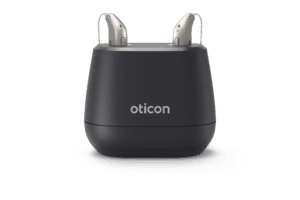
Table‑Top Chargers
The standard option — compact, stable, and ideal for the bedside table.
Simply drop the hearing aids into the cradle and they begin charging automatically.
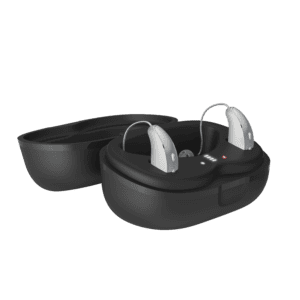
Smart Chargers
Perfect for people who travel, work away from home, or enjoy weekends outdoors.
These smart chargers include their own internal power reserve, allowing you to fully recharge your hearing aids up to three times without needing a plug socket, making them ideal for those who travel a lot or prefer a cable free routine.
Rechargeable Options in Every Style
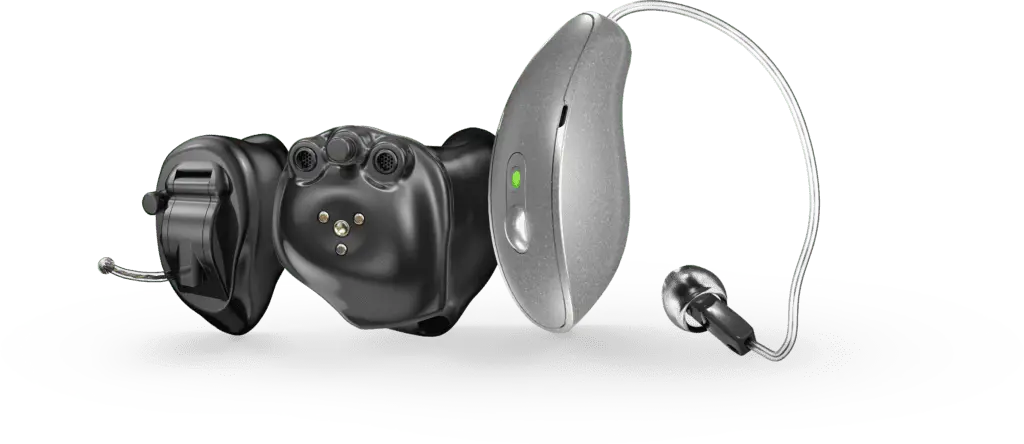
Receiver‑in‑the‑ear (RITE/RIC)
In‑the‑ear (ITE)
In‑the‑canal (ITC)
“Invisible” deep‑canal options
This means you can choose the size and style that suits your hearing needs, comfort, and cosmetic preferences — without compromising on convenience.
Who Benefits Most from Rechargeable Hearing Aids?
Rechargeable hearing aids are an excellent choice for:
people with reduced dexterity
those who prefer a simple daily routine
frequent travellers
patients who want modern, reliable technology
people who use Bluetooth streaming regularly
environmentally conscious users
They’re ideal for anyone who wants their hearing aids to “just work” without thinking about batteries.
Traditional Batteries Are Still Available
While rechargeable technology is now the standard at Audibility, we still offer traditional battery‑powered hearing aids for patients who prefer them or have specific clinical reasons for choosing them.
Areas We Serve
Audibility is an independent hearing care clinic based in Motherwell, serving patients from across North and South Lanarkshire including Bellshill, Hamilton, Wishaw, Coatbridge, Airdrie, Uddingston and the surrounding areas.
Book a Hearing Test
Start your journey with friendly, independent advice from HCPC registered audiologists.
Rechargeable Hearing Aids — Frequently Asked Questions
How long do rechargeable hearing aids take to charge?
Most models fully charge in around 3 hours.
How long does the battery last?
A full charge easily lasts a full day, with some models offering up to 48 hours of use.
Do I need to replace the batteries?
No. Lithium‑ion batteries are sealed inside the hearing aids and designed to last several years.
Can I travel with rechargeable hearing aids?
Yes. Many models include portable travel chargers with enough internal power to recharge your hearing aids up to three times without a plug socket.
Are rechargeable hearing aids available in small or invisible styles?
Yes. Rechargeable options now exist in almost every style, including discreet in‑the‑ear and “invisible” canal‑based designs.
Do rechargeable hearing aids work with Bluetooth?
Yes. Most modern rechargeable hearing aids support Bluetooth streaming for iPhone and Android.
What if I prefer traditional batteries?
We still offer battery‑powered hearing aids for patients who prefer them or have specific clinical needs.
Related Pages